On over-recoveries and refunds

by Francis Saturnino Juan

The Energy Regulatory Commission (ERC) announced recently that it ordered Meralco to refund its consumers the total amount of PhP19.95 billion representing “Meralco’s over-recovery of rates for the lapsed period from 01 July 2022 to 31 December 2024.” In a decision split 3-2, the ERC directed Meralco to return this over-recovery by decreasing its distribution charges by PhP0.1189 per kilowatt-hour (kWh) across all customer categories of the distribution utility over three years, or until the entire PhP19.95 billion is refunded. In response to this announcement, NASECORE, a consumer group led by former DOE Undersecretary Pete Ilagan, expressed that the decision favors Meralco and is detrimental to consumers, especially residential customers who face higher distribution charges compared to other customer categories. The group suggested an immediate audit of Meralco’s over-recovery and a full refund of the PhP19.95 billion, rather than spreading it over three years.

As a Meralco customer, I am pleased with any forthcoming rate reductions. However, I am frustrated that over the years, the ERC has permitted Meralco to implement interim distribution charges instead of fixed and final rates. This has allowed Meralco to collect more from its customers than it would have if the distribution charges had been pre-approved by the ERC, rather than relying on the current and legally questionable “lapsed period rate regulation,” which is tantamount to retroactive rate-making. This approach has led to various uncertainties and inequities, some of which NASECORE has highlighted. Despite the ERC’s recent refund order, the harm to all Meralco consumers, both large and small, has already been inflicted, and Meralco has already benefited from additional free cash to support its past operations.

Why has the situation arisen where Meralco is periodically required to refund billions of pesos based on the ERC’s true-up calculation of its “Actual Weighted Average Tariff (AWAT) compared to the Approved Final Distribution Rate Implemented During the Lapsed Period?” The explanation is straightforward – over the last decade or so, the ERC has not managed to conduct, finalize, and issue a conclusive rate-reset decision or Final Determination on Meralco’s rates. Had this been done, the concept of “lapsed period rate regulation” would not have been invented. Consequently, there would have been no over-recoveries in the implementation of Meralco’s distribution rates during the lapsed period, and no necessity for any refunds.

To be fair, the situation is not unique to Meralco. All other private distribution utilities (DUs) under performance-based rate-making face the same dilemma. Worse for them, rather, their customers, there seems to have been no urgency for them disclose and update all of their distribution charge over-recoveries to ERC and for ERC to direct them, similar to Meralco, to already implement their own refunds.

Over-recoveries and refunds are not gifts from the ERC to us, the consumers. Whether the refund is given all at once, as NASECORE suggests, or spread over three years, as decided by the 3-2 ERC majority, the PhP19.95 billion refund Order is a reminder of the ERC’s failure to effectively and timely regulate distribution tariffs, not only for Meralco but for all DUs, including all the Electric Cooperatives, across the country. Instead of celebrating the refund Order or debating the length of the refund period, we should collectively demand an improved system of distribution rate regulation that altogether eliminates the occasion and need for over-recoveries and refunds.
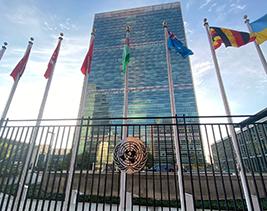
UN DESA VOICE APRIL 2025

MONTHLY NEWSLETTER, VOL. 29, NO. 4 – APRIL 2025

“We have witnessed how youth can mobilize global action,” said UN DESA’s Under-Secretary-General Li Junhua, stressing the importance of young people’s involvement in shaping a future that is more inclusive, peaceful, sustainable and fair. “Young people [are] showing up, contributing their skills, expertise, ideas and energy to solve the pressing challenges we are facing today so that future generations are better off,” Mr. Li said.

Mr. Li’s message was delivered to a room filled with youth leaders who had gathered for the 2024 edition of the Economic and Social Council (ECOSOC) Youth Forum. Now it’s that time of the year again, when UN Headquarters will open its doors to young people from across the world, inviting them to be part of negotiations and actions that will help the world deliver a more sustainable future, that benefits us all.

Stressing how ECOSOC aims to put inclusivity front and center, its President, Ambassador Bob Rae (Canada), is emphasizing: “We bring together actors across different sectors to identify and commit to action that is going to be transformative and can have a tangible impact in countries and communities. […] I am committed to ensuring that we are leveraging these opportunities in an inclusive manner to promote action, ambition, innovation and engagement.”

As the world faces multiple crises, the demand for global solidarity and action is urgent. Described as the largest UN annual gathering of young people, the annual ECOSOC Youth Forum invites youth leaders to participate in discussions that will impact the future of their generation, and generations to come.

“Young people – young experts – need to be engaged in all the challenges that humanity faces today,” said Mr. Li Junhua. And the need has never been greater.

Taking place on 15-17 April 2025 at the United Nations Headquarters in New York, young people will work side-by-side with high-level UN officials and government representatives, delving into a range of pressing issues. The Sustainable Development Goals (SDGs) under review at the 2025 High-level Political Forum (HLPF) on Sustainable Development will also be in focus at this year’s event.

Youth will be able to share their perspectives on good health and well-being (SDG 3), gender equality (SDG 5), decent work and economic growth (SDG 8), life below water (SDG 14), and partnerships for the goals (SDG 17). By emphasizing science- and evidence-based solutions, the Forum will also encourage innovative and data-driven approaches to addressing today’s most urgent challenges.

Young people will also be part of deliberations related to major conferences taking place this year, including the UN Ocean Conference, the Fourth International Conference on Financing for Development and the Second World Summit for Social Development. Youth voices will thus be heard in many ways and on diverse topics critical to sustainable development.

For more information: 2025 ECOSOC Youth Forum

Expert Voices

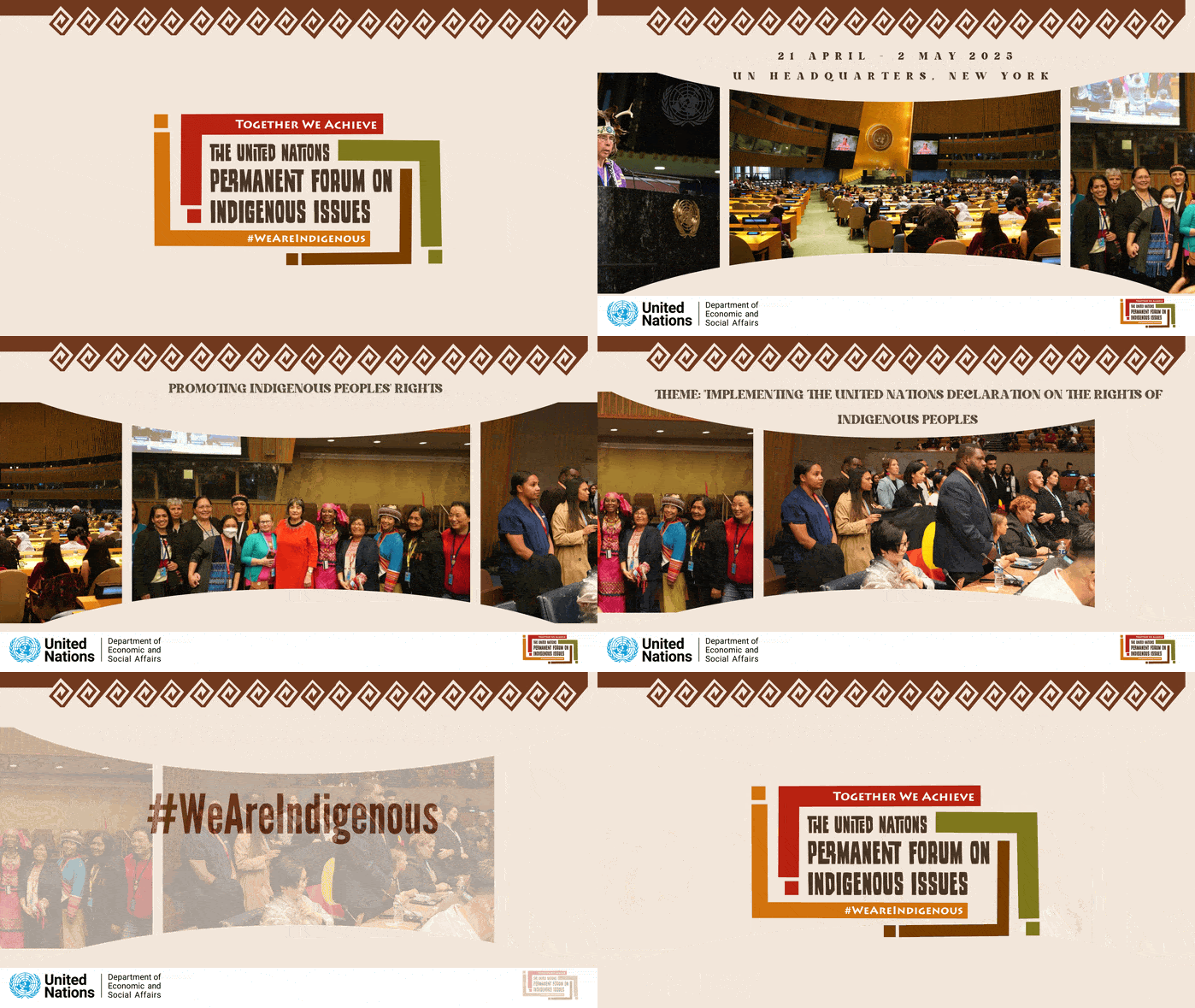
Later this month, the 24th session of the United Nations Permanent Forum on Indigenous Issues (UNPFII) kicks off at UN Headquarters in New York, bringing together Indigenous Peoples, government representatives, UN agencies and civil society from around the world. Ahead of the session, we spoke with Ms. Hindou Oumarou Ibrahim, Chair of UNPFII, about key developments and issues related to Indigenous Peoples and their rights.

In 2007, the UN General Assembly adopted the UN Declaration on the Rights of Indigenous Peoples. Where do we stand on its realization around the world?

“The UN Declaration on the Rights of Indigenous Peoples (UNDRIP) adopted in 2007, has significantly influenced global policies, but its full realization remains uneven. Some States have incorporated its principles into laws, supporting land rights, self-determination and cultural preservation. However, many Indigenous Peoples still face land dispossession, discrimination and violence. Implementation challenges stem from political resistance, economic interests and legal barriers. One of the main problems continues to be the recognition of Indigenous Peoples by some Member States. While international bodies and advocacy groups push for stronger enforcement, Indigenous Peoples continue to lead efforts for their rights. Progress varies, but UNDRIP remains a vital framework for advancing Indigenous Peoples’ rights worldwide.”

With the many crises around the world such as climate change and biodiversity loss, what are some of the biggest challenges that Indigenous Peoples face? How can Indigenous Peoples’ knowledge and practices contribute to environmental protection, climate adaptation and mitigation?

“Indigenous Peoples are guardians and stewards of Nature. We possess the knowledge of our lands, territories and environments. This knowledge is not theoretical; it has been tried and tested since time immemorial and for many generations. As Indigenous Peoples, we are dependent and interconnected with Mother Earth and vice versa. So, when the environment is impacted by the effects of climate change, Indigenous Peoples are directly impacted, as climate change affects our livelihoods, our food sovereignty, our cultures and traditions and our ability to live on our ancestral lands. At the same time, the world needs to listen to Indigenous Peoples, as we have solutions and knowledge. Through supporting Indigenous Peoples and ensuring their voices are included in important dialogues and decision-making on biodiversity and climate change, as well as ensuring that financial resources is provided directly to Indigenous Peoples, we can work together to mitigate climate change for all.”

In what ways does the UNPFII address the unique challenges faced by Indigenous women and girls?

“The UNPFII has always served as a critical platform to amplify the already strong voices of Indigenous women and girls. Indigenous women and girls face intersectional discrimination, because their gender and their identity as Indigenous Peoples. With this intersectionality in mind, Indigenous women and girls face marginalization in many facets of their lives, including economic, political and social development, culture, environment, education, health and human rights.

However, Indigenous women are essential to society – we possess unique knowledge, transmit this knowledge, culture and traditions and are critical leaders in our own communities and families. Over the two decades since the UNPFII was established, through the Forum as well as beyond the halls of the United Nations, Indigenous women and girls have advocated to secure their rights. This has resulted in achievements such as the realization of the United Nations Declaration on the Rights of Indigenous Peoples, the ILO Convention 169 and more recently, the adoption of General Recommendation No. 39 of the Convention on the Elimination of All Forms of Discrimination Again Women (CEDAW), which provides an important tool to advance the implementation of Indigenous women’s rights and should be integrated into this broader discussion.”

For more information: UN Permanent Forum on Indigenous Peoples

Photo credit: AFPAT.

Things You Need To Know

Financing is the fuel of development. With adequate financing, the world can tackle poverty, inequalities, hunger, education, and the climate crisis. Yet, the world faces a stark financing divide and shrinking fiscal space. Here are 5 things you should know about financing for sustainable development.

1. Sustainable development is a good investment

Investment in sustainable development is good value for money. For example, every $1 invested in girls’ education can generate a $2.80 return. Every $1 invested in water and sanitation can reduce health care costs by $4.30.

2. Financing gaps are large and growing

The SDG financing gap – an estimated $4 trillion shortfall in annual investment – has never been so large. This is up from an estimated $2.5 trillion in 2019.

3. Developing countries are facing high debt burdens that crowd out other spending

In 2023, developing countries spent a record $1.4 trillion to service their foreign debt. Around 3.3 billion people live in countries that spend more on debt interest payments than on health or education.

4. The international financial architecture needs urgent changes to ensure affordable access to finance

Many developing countries can’t access finance at affordable rates, especially during times of crisis. On average, developing countries face borrowing costs that are two to four times higher than developed countries pay.

5. The fourth International Conference on Financing for Development (FFD4) is a once-in-a-decade opportunity for change

In June, world leaders will come together at FFD4 in Sevilla, Spain to take action to deliver an SDG investment push. They will also work on reforming the international financial architecture to enable the transformative change that the world urgently needs. FFD4 will showcase the power of multilateral cooperation to tackle these global challenges, which far exceed the capacity of any single country to respond to.

In the lead up to FFD4 in Sevilla, follow the ECOSOC Financing for Development Forum (28-29 April), and the Fourth Preparatory Committee Session (30 April-1 May).

Learn more and stay updated on the road to Sevilla and the FFD4 Conference.

Photo credit: UN DESA/Helen Rosengren.

MORE FROM UN DESA

Read More Here: https://desapublications.un.org/un-desa-voice/april-2025