IRENA at COP30: as COP30 ends, countries focus on implementation

COP30 WRAP UP

The 30th United Nations Climate Change Conference (COP30), which concluded last week, signaled a global shift toward implementation. Together with global partners and allies, IRENA demonstrated how commitments can be translated into concrete action on the ground, with the goal of catalysing just and inclusive energy transitions by raising ambition and scaling up investments.

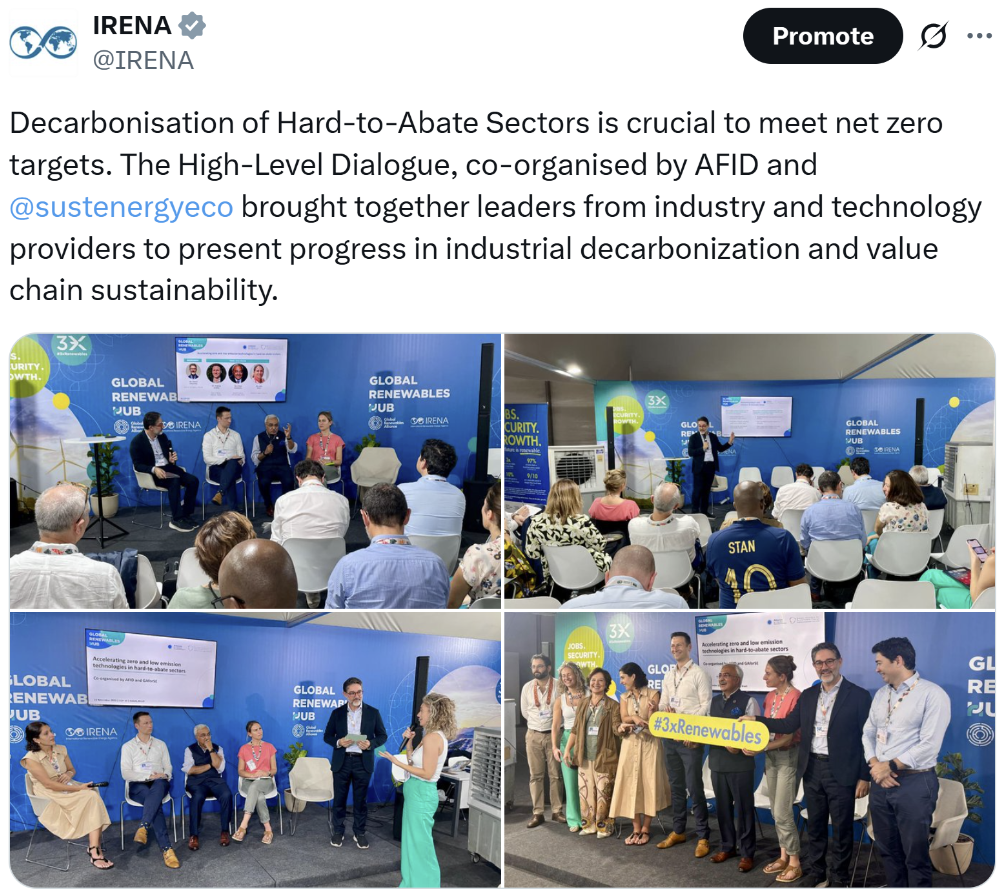
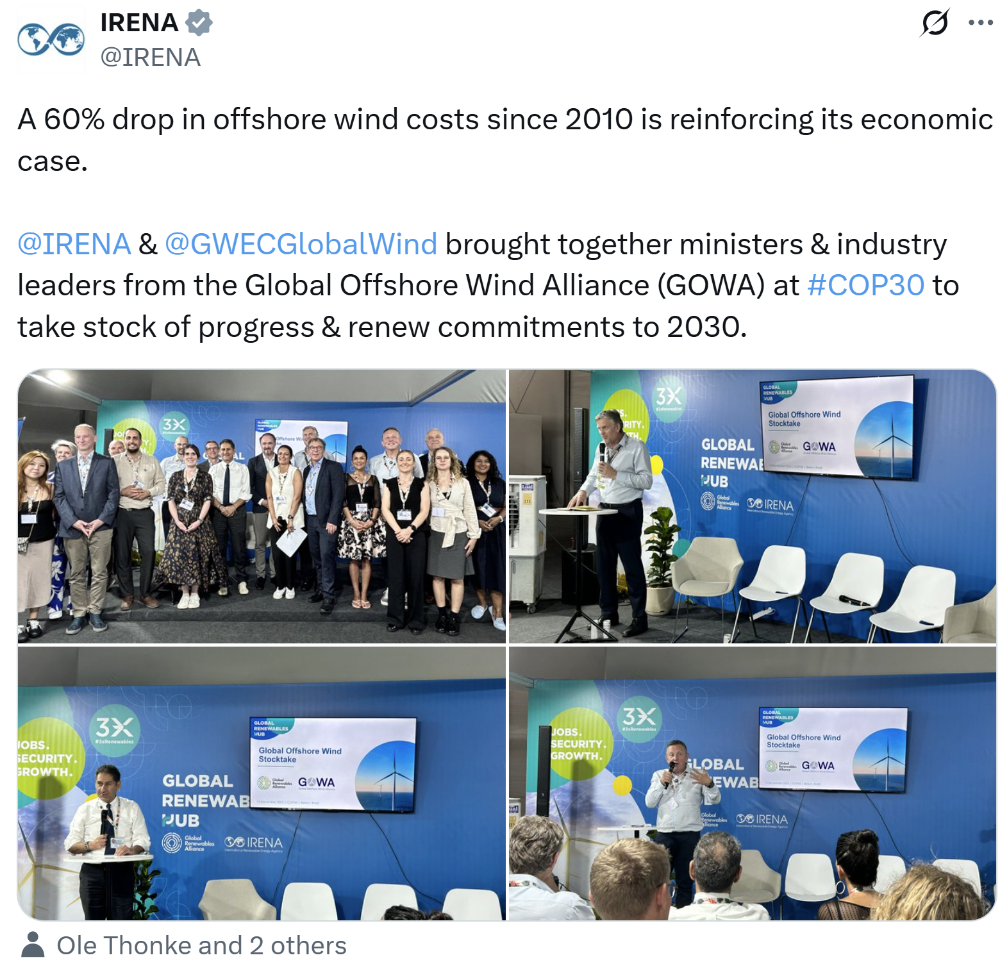
IRENA’s pavilion, the Global Renewables Hub jointly hosted with the Global Renewables Alliance (GRA), provided a lively platform for engaging exchanges with IRENA Members, partners and guests.

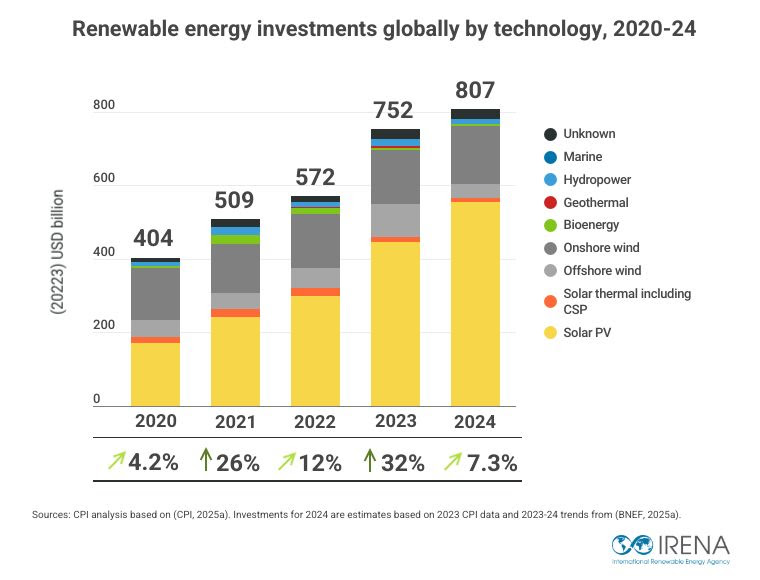
Released to inform the global finance discourse, Global Landscape of Energy Transition Finance 2025 revealed a new record of USD 2.4 trillion in energy transition investments in 2024, but these were highly concentrated in advanced economies, leaving emerging and developing countries behind.

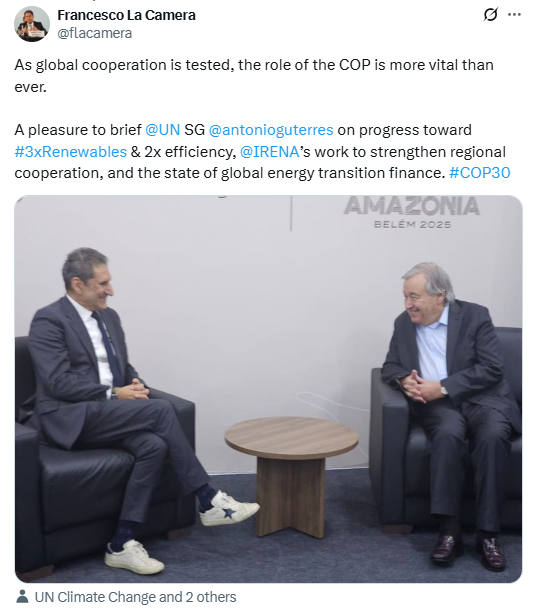
In a bilateral meeting with UN Secretary-General António Guterres, IRENA Director-General Francesco La Camera briefed him on progress towards the UAE Consensus goals to triple renewable capacity and double energy efficiency by 2030, and reaffirmed the Agency’s commitment to strengthening regional cooperation and boosting energy transition finance.

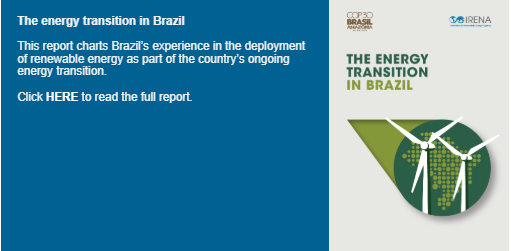
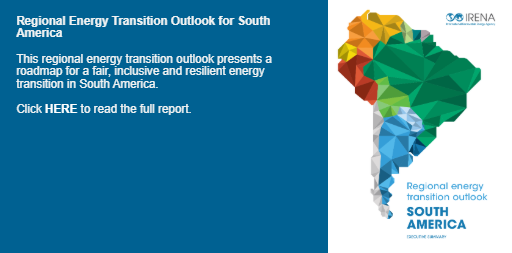
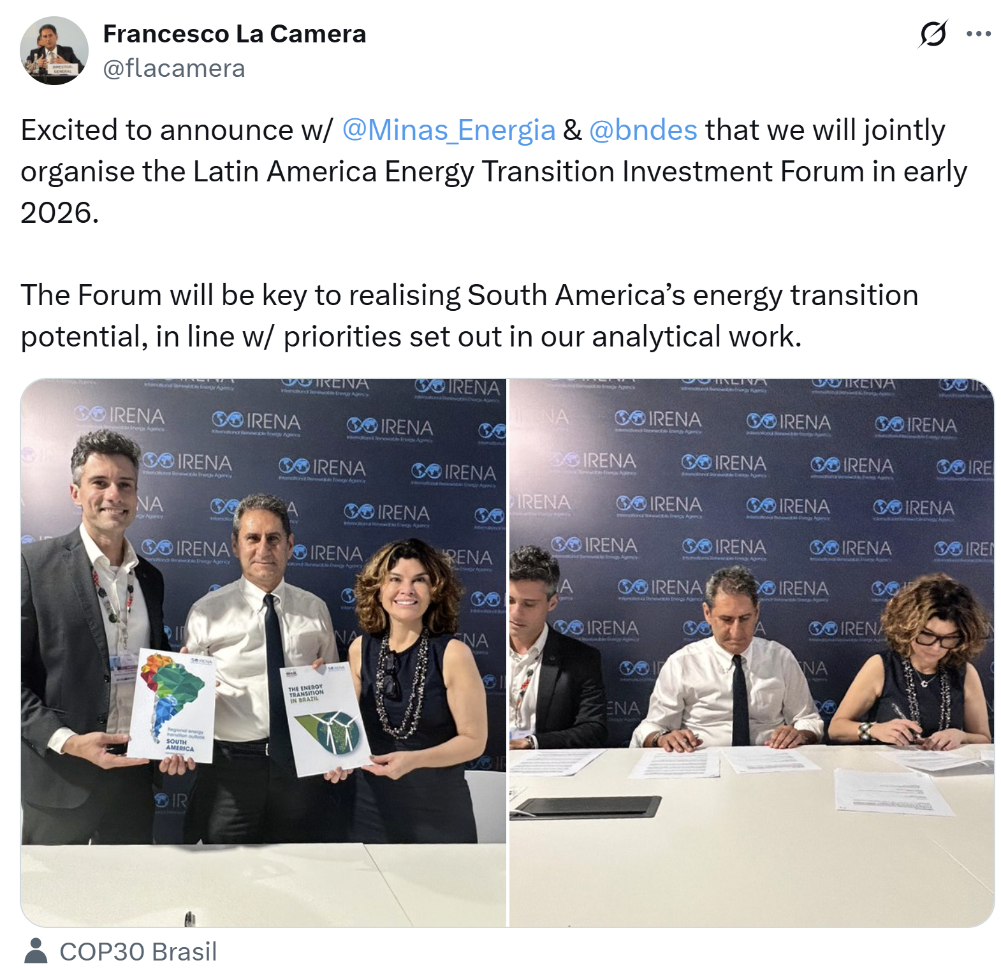
Launched at COP30, IRENA’s new Regional Energy Transition Outlook South America highlights the vast opportunities for economic growth, innovation, and energy security across the region through cooperation and the scale of investment. The region could significantly grow its GDP while creating more than 12 million jobs in the energy sector by 2050.

As a group of the world’s leading power utilities, the Utilities for Net Zero Alliance (UNEZA), facilitated by IRENA, aims to address key investment barriers, particularly in grids and flexibility. At COP30, UNEZA announced increased investment commitments of nearly USD 150 billion annually, with a major focus on grid infrastructure.

For more on the COP30 takeaway and IRENA’s insights on ways forward, please read this article. Please also see below IRENA’s latest data and activities in support of the climate objectives discussed at COP30.

Read more here: https://www.irena.org/Events/2025/Nov/IRENA-at-COP30

ADB under fire for ‘false solutions’ in energy policy review

By: Cristina Eloisa Baclig – Content Researcher Writer / @inquirerdotnetINQUIRER.net

Civil society leaders give Asian Development Bank a “zero” on climate action during a press briefing in Quezon City on November 20, 2025, calling on the bank to stop funding fossil fuels and commit fully to a just energy transition.

(Photo from GAIA Asia Pacific)

MANILA, Philippines — Civil society groups on Thursday slammed the Asian Development Bank (ADB) for what they called a “dangerous pivot” toward corporate interests and false climate solutions, as the bank reviews its 2025 energy policy and faces scrutiny over decades of support for incineration and fossil fuels.

In separate statements released on November 20, the Global Alliance for Incinerator Alternatives (GAIA) Asia Pacific and the NGO Forum on ADB scored the multilateral lender for continued financing of polluting waste-to-energy (WtE) incineration and fossil gas infrastructure.

Both groups argue that the Bank’s draft policy fails to adequately protect climate-vulnerable communities, disregards human rights safeguards, and undermines global climate goals.

Billions in incineration financing since Paris Agreement
GAIA, a global alliance of over 1,000 grassroots groups and organizations in 90 countries, warned that ADB remains the region’s top backer of incineration-based waste management.

Since the Paris Agreement in 2015, GAIA noted that the Bank has financed 49 projects with incineration or co-incineration components amounting to USD 15.3 billion. Meanwhile, a separate analysis by the Climate Policy Initiative found that over 94 percent of climate finance intended for methane abatement in the waste sector continues to go to incineration.

“This reflects a troubling pattern,” GAIA said. “Money intended for climate action is being diverted to technologies that worsen pollution and drain public resources.”

GAIA’s Climate and Anti-Incineration Campaigner Brex Arevalo emphasized that incinerators—regardless of technology—continue to pollute and create hazardous byproducts.

“Incinerators remain polluters no matter the technology,” Arevalo said. “While incineration reduces waste volume, the remaining ash, wastewater, and emissions are hazardous and must still be disposed of in landfills. This exposes the myth that incineration eliminates the need for dumpsites. It does not. It creates even more toxic byproducts.”

Communities in debt, distress, and danger
GAIA and its regional partners stated that ADB-backed incineration projects are exacerbating economic and environmental risks for vulnerable countries.

In the Maldives, Zero Waste Maldives’ Afrah Ismail warned that the Bank is pushing a massive WtE incinerator in Thilafushi, despite the archipelago’s high debt burden and climate vulnerability.

“ADB has backed waste-to-energy incineration through loans and grants for a major WtE plant in the Maldives, a climate-vulnerable archipelago whose public debt now exceeds 120% of GDP and which international financial institutions classify as being at high risk of debt distress,” Ismail said.

Chythenyen Kulasekaran of the Centre for Financial Accountability cited India’s experience as further proof of failure.

“The ADB should not be funding waste-to-energy incineration, which has a massive track record of failure across South Asia. All 21 waste-to-energy plants in India are highly polluting and do not comply with the environmental policy standards, as reported by the government itself.”

‘Zero marks across the board’
In a separate assessment, the NGO Forum on ADB—a network of civil society groups monitoring the Bank and the Asian Infrastructure Investment Bank—gave the ADB a failing grade on climate, human rights, and transparency.

Citing the 2025 Energy Policy Review and draft amendments, the Forum warned that the Bank continues to support the expansion of fossil fuels and extractive industries, while ignoring demands for genuine stakeholder consultation.

“The Bank’s process violated its own Access to Information Policy and commitments to stakeholder engagement,” the group said. “Key documents were disclosed late, consultations were brief and selective, and feedback was not meaningfully integrated.”

The draft policy retains fossil gas as a so-called “transition fuel,” allowing continued investment in gas pipelines and exploration, despite what the Forum calls “overwhelming scientific consensus” that no new oil or gas fields are compatible with limiting global warming to 1.5°C.

The Forum also raised concerns over the ADB’s Energy Transition Mechanism (ETM), which critics argue may prolong fossil fuel use rather than accelerate coal retirement. Loopholes in ADB’s coal ban remain, it added, and mining is now being rebranded as “green” through the Bank’s Critical Minerals for Clean Energy Technologies (CM2CET) initiative.

ADB is also reportedly considering lifting its nuclear energy financing ban.

“This is a reckless regression,” the Forum said. “Nuclear remains expensive, unsafe, and produces long-lived radioactive waste, while Small Modular Reactors are unproven and financially burdensome.”

Other so-called “false solutions” identified in the revised policy include coal co-firing, large hydropower, waste-to-energy, and geothermal projects sited in Indigenous territories—all of which, the Forum said, come with risks of displacement, repression, land conflicts, and gendered harm.

“Energy transitions that violate rights are neither just nor sustainable,” the coalition added. “ADB’s silence speaks louder than its rhetoric.”

Civil society demands
Over a hundred civil society organizations endorsed the Forum’s Climate Scorecard, which uses lived experience as its grading system: “gas pipelines through Indigenous lands—zero; opaque financial intermediary lending that hides coal exposure—zero; promotion of nuclear, extractives, and incinerators while claiming climate leadership—zero.”

“ADB’s score of zero is a mirror reflecting the Bank’s own choices,” the coalition said.

They are now calling on the ADB Board of Directors to reject the draft energy policy in its current form and implement urgent reforms. These include:

A fully transparent review process through 2026
Closure of all coal financing loopholes
A time-bound fossil gas phaseout
Rejection of nuclear energy and CM2CET extractive-driven initiatives
An end to all false solutions
Binding human rights and just transition standards
Full alignment with the 1.5°C climate goal and a complete fossil fuel phaseout by 2030
“ADB’s Energy Policy Review remains a failed test and a failing grade,” the Forum concluded. “The climate emergency demands leadership rooted in justice and science — not profit, not technofixes, and not exclusion. Communities across Asia refuse to accept another generation locked into fossil fuels.”

Read more here: ADB under fire for ‘false solutions’ in energy policy review

UN DESA VOICE Monthly Newsletter: Vol 29, No. 11 – November 2025

Keeping the promise of placing people at the centre of development
“Thirty years ago, the world gathered in Copenhagen and made a promise: to put people at the centre of development. This November, we meet again—this time in Doha—for the Second World Summit for Social Development. This Summit comes at a critical moment,” said UN DESA’s Under-Secretary-General, and Summit Secretary-General Li Junhua, pointing to widening inequalities, eroding trust and communities struggling with conflict and climate shocks.

From 4 to 6 November 2025, world leaders will gather in Qatar for the Second World Summit for Social Development. This journey began in Denmark, in 1995, where 117 countries agreed to the groundbreaking Copenhagen Declaration for Social Development and its Programme of Action.

Since then, the world has seen extraordinary economic and social progress. Over one billion people have escaped extreme poverty; access to healthcare, education and social protection has expanded; people are living longer and healthier lives; more women are able to join the workforce; and young girls can realize their hope for a future of opportunity and promise.

But challenges remain. Growing shocks from climate change impacts, conflicts, or disruptions from changing patterns of trade, production and technology are fueling uncertainty and anxiety. People are growing increasingly insecure, with many people engaged in precarious employment or not earning a living wage that meets their needs. Fueling this insecurity is a growing skepticism of the willingness of governments to put their people first.

People across generations – younger and older alike -are searching for answers to both growing and persistent social development challenges. This Summit will be an opportunity to deliver a response – one that that ensures dignity, provides opportunities, inspires hope and is rooted in action.

At the Doha Summit, Governments will adopt the Doha Political Declaration as the principal outcome. The declaration will reaffirm the centrality of eradicating poverty, promoting full employment and decent work for all, reducing inequality and enhancing social integration. The Declaration takes fully into account new and emerging issues that impact delivery of these objectives, such as digitalization and artificial intelligence, climate change and the global trend of eroding public trust in institutions, among other cross-cutting issues.

But the real success of the Summit will be measured by what happens after. By forging a new global consensus for accelerating social progress through multilateral cooperation, this Summit will ensure that people’s voices and engagement matter. Because in the end, development isn’t just about policies or politics — It’s about all of us.

“I invite you all to follow our efforts and join us in Doha, Qatar, from 4 to 6 November,” said Mr. Li. “Together, let us accelerate social development and make dignity and opportunity a reality for all.”

Learn more about the Summit: Second World Summit for Social Development
View the full programme here using our online platform TeamUp.
Follow Doha Solution and Studio sessions happening on the ground by browsing this site.
Be inspired by commitments made towards the Doha Solutions Platform for Social Development.
Follow efforts and deliberations live on UN Web TV.

https://www.youtube.com/watch?v=OXr25vn6Z0M
Share this!

Expert Voices

What social progress means to people around the world

As preparations intensify for the Second World Summit for Social Development, to be held from 4 to 6 November 2025, the Accelerating Social Progress campaign invited people from all walks of life around the world to reflect on a single question: What does social progress mean to you? 

The responses reveal a powerful message: social progress is about people, equality, and hope. Many participants described it as “a world where no one is left behind,” emphasizing the need for access to decent work, quality education, health care, and social protection.

Respondents underscored solidarity and community resilience, highlighted justice, trust, and opportunities for youth, and pointed to equality for women and persons with disabilities as key dimensions of progress.

From young changemakers to older innovators, people shared what progress means in their daily lives, innovation, compassion, intergenerational solidarity, and human rights as the moral core of development. These are the true expert voices: individuals living the realities of change and inclusion in their communities.

Together, their insights reaffirm that social progress is not measured solely by economic growth but by the well-being and dignity of every person. The collective voices gathered through the campaign will help shape the discussions in Doha, guiding efforts to renew political will for the Copenhagen Declaration and Programme of Action.

To capture even more perspectives, the online survey has now been extended until 7 November 2025.

Learn more and share your views here: https://social.desa.un.org/world-summit-2025/news/deadline-extended-what-does-social-progress-mean-to-you

Things You Need To Know

6 lessons from 80 years of UN progress toward sustainable development

Photo credit: UNHCR

As the United Nations marks its 80th anniversary, one story stands out: the world’s journey—through challenges and breakthroughs—toward sustainable development for all. Advancing Together, a new UN DESA report, traces how the UN has helped transform global cooperation, uniting countries around shared goals for people and planet. Here are six key lessons from this journey:

1. From growth to sustainable development

The  early decades of the UN focused on post-war reconstruction and economic expansion. Over time, that vision broadened to include social inclusion and environmental stewardship. The journey from growth alone to sustainable development marks one of the most transformative shifts of the UN.

2. From silos to integration

For years, economic, social, and environmental goals were treated separately. Advancing Together shows how they converged—culminating in the 2030 Agenda, where prosperity, equality, and planetary health are recognized as inseparable. True progress means advancing all three together.

3. Collaboration makes change possible

Major global conferences—from Stockholm (1972) to Rio (1992) and Paris (2015)— demonstrate the power of cooperation. Multilateral action through the UN has driven breakthroughs, from defining human rights to advancing gender equality, highlighting that shared challenges require shared solutions.

4. Resilience is key to enduring progress

Rising geopolitical tensions, persistent financing gaps, the widening digital divide, and the spread of misinformation are testing global solidarity. Yet progress continues—from renewed climate commitments to landmark outcomes of the Fourth International Conference on Financing for Development (FfD4)— proving that cooperation can endure even in turbulent times.

5. Foresight, adaptation, and innovation keep us future-ready

Anticipating change has long been a UN strength. UN DESA’s flagship reports help countries identifying risks early and be better prepared for future challenges. Investing in data, science, and digital innovation empowers institutions to adapt quickly and deliver results amid uncertainty.

6. Norms and inclusive multilateralism remain indispensable

Common frameworks—like the SDGs, the Paris Agreement, and the Pact for the Future—translate shared values into collective action. In a divided world, inclusive multilateralism is still the most effective path to tackle challenges no country can face alone, from climate change and pandemic preparedness to digital transformation and inequality.

Read more about this journey in UN DESA’s latest report “Advancing Together. Eight decades of progress towards sustainable development for all” available here.

Photo credit: UN Photo

More from UN DESA

Read more here: https://desapublications.un.org/un-desa-voice/november-2025


On High Energy

Good morning, world! Renewables overtook coal as the globe’s biggest source of electricity in the first half of the year. One reason is that China added more solar and wind capacity than the rest of the world combined. Today, my colleague Keith Bradsher explains how it’s done.

A slide show of solar panels, wind turbines and pylons in a misty mountain landscape.
                 On the Tibetan Plateau. The New York Times

High energy

Author Headshot By Keith Bradsher

I reported from Gonghe on the Tibetan Plateau.

This summer, I got a good look at China’s clean-energy future, more than 3,000 meters above sea level in Tibet.

Solar panels stretch to the horizon and cover an area seven times the size of Manhattan. (They soak up sunlight that is much brighter than at sea level because the air is so thin.) Wind turbines dot nearby ridgelines, capturing night breezes. Hydropower dams sit where rivers spill down long chasms at the edges of the plateau. And high-voltage power lines carry this electricity to businesses and homes more than 1,500 kilometers away.

The intention is to harness the region’s bright sunshine, cold temperatures and sky-touching altitude to power the plateau and beyond, including data centers used in China’s A.I. development.

While China still burns as much coal as the rest of the world combined, last month President Xi Jinping promised to reduce its greenhouse gas emissions and expand renewable energy by sixfold in the coming years. A big part of that effort is in sparsely inhabited Qinghai, a province in western China in a region known among the Tibetans as Amdo. I came as part of a government-organized media tour of clean-energy sites in Qinghai, which usually bars foreign journalists to hide dissent by its large ethnic Tibetan population. (The Times paid for my travel.) Today, I’ll tell you what I saw.

A huge effort

A map of the Talatan Solar Park in China.
Source: Satellite imagery by Planet, July 2025. By Mira Rojanasakul/The New York Times

China is not the first country to experiment with high-altitude clean energy. But other places — in Switzerland and Chile, for instance — are mountainous and steep. Qinghai, slightly bigger than France, is mostly flat. That’s perfect for solar panels and the roads needed to bring them in. And the cold air improves the panels’ efficiency. The ones in Qinghai could run every household in Chicago. And China is building more, including panels at 5,000 meters.

The main group of solar farms, known as the Talatan Solar Park, dwarfs every other cluster of solar farms in the world. It covers 420 square kilometers in Gonghe County, an alpine desert.

Electricity from solar and wind power in Qinghai (the birthplace of the current Dalai Lama, now in exile) costs about 40 percent less than coal-fired power. As a result, several electricity-intensive industries are moving to the region. One type of plant turns quartzite from mines into polysilicon to make solar panels. And Qinghai plans to quintuple the number of data centers in the province. At this altitude, they consume 40 percent less electricity than centers at sea level because they barely need air-conditioning. (Air warmed by the servers is piped away to heat other buildings.)

Where sheep roam

A map of China’s solar potential.
Source: Global Solar Atlas. By Mira Rojanasakul/The New York Times

As an incentive to build solar farms, many western Chinese provinces initially offered free land to companies. When the Talatan solar project installed its first panels in 2012, they were low to the ground. Ethnic Tibetan herders use the region’s sparse vegetation to graze their sheep, but the animals had trouble getting to the grass. Now, installers place the panels on higher mountings.

Dislocating people for power projects is politically sensitive all over the world. But high-altitude projects affect relatively few people. China pushed more than one million people out of their homes in west-central China a quarter-century ago and flooded a vast area for the reservoir of the Three Gorges Dam. This year, China has been installing enough solar panels every three weeks to match the power-generation capacity of that dam.

See more photos here.

Sheep passing a power line.
                 The New York Times

Li You contributed research from Gonghe County.

Read more here: High Energy by Keith Bradsher New York Times

Nice Conference Adopts Declaration Underscoring Vital Importance of Ocean to Life on Our Planet, Essential Role in Mitigating Climate Change

NICE, FRANCE, 13 June — After a week of deliberation and discussion, the United Nations Ocean Conference today by consensus adopted a political declaration titled “Our ocean, our future: united for urgent action”, stressing that the ocean plays an essential role in mitigating the adverse effects of climate change.

“The ocean is fundamental to life on our planet and to our future, and we remain deeply alarmed by the global emergency it faces”, the Conference’s outcome document (A/CONF.230/2025/L.1) said, adding also: “Action is not advancing at the speed or scale required to meet Goal 14 and realize the 2030 Agenda [for Sustainable Development]”.

The declaration, also known as the “Nice Ocean Action Plan”, expressed deep concern that the ability of the ocean and its ecosystems to act as a climate regulator and to support adaptation has been “weakened”.

Underlining the importance of interlinkages between the ocean, climate and biodiversity, the declaration called for enhanced global action to minimize the impact of climate change and ocean acidification. It emphasized the particular importance of implementing various UN agreements and frameworks, recognizing that it would significantly reduce the risks and impacts of climate change and help to ensure the health, sustainable use and resilience of the ocean.

Further emphasizing the need to adapt to the “unavoidable effects” of climate change, the declaration affirmed the importance of the full and effective implementation of the Convention on Biological Diversity and its Protocols, as well as the Kunming-Montreal Global Biodiversity Framework.

Commending the leadership of small island developing States in highlighting and aiming to address sea level rise, the declaration also expressed concern for the high and rapidly increasing levels of plastic pollution and its negative impacts on the environment.

The declaration reaffirmed shared commitment to accelerating action to prevent and significantly reduce and control marine pollution of all kinds, and reiterated the need to increase scientific knowledge on deep sea ecosystems.

Further, the Conference’s outcome document recognized the “tremendous opportunities” offered by sustainable ocean-based economies for States, especially developing countries, and particularly small island developing and least developed countries, to eradicate poverty and hunger and achieve economic growth and social development.

The declaration recognized the fundamental role of management tools, such as sustainable ocean plans, in achieving sustainable ocean-based economies and the sustainable management of ocean areas under national jurisdiction. It encouraged all States to promote participatory management schemes for small-scale fisheries and highlighted the importance of efforts in regional fisheries management organizations to establish sound management measures for sustainable fisheries and recognized the critical role of maritime transport, routes and infrastructure in the global economy, trade, food and energy security.

Noting the adoption of the Agreement on Marine Biological Diversity of Areas beyond National Jurisdiction, the declaration called upon States and regional economic integration organizations that have not done so to consider signing and ratifying, approving or accepting the Agreement.

Furthermore, the declaration called on States to promote awareness and education campaigns at the local, national, regional and international levels to inform the public about the importance of a healthy ocean and resilient marine ecosystems. Additionally, it emphasized the critical need for national ocean accounting and mapping of coastal and marine ecosystems, and of the ocean floor to inform policy decisions, development planning, integrated coastal zone management and conservation planning.

Ocean action must be based on the best available science and knowledge, including, where available, traditional knowledge, knowledge of Indigenous Peoples and local knowledge systems, while recognizing and respecting the rights of Indigenous Peoples, and local communities, in conserving, restoring and sustainably using the ocean, seas and marine resources for sustainable development.

The declaration also recognizes that Sustainable Development Goal (SDG) 14 is one of the least funded Goals and that accelerating ocean action globally requires significant and accessible finance and the fulfilment of existing commitments and obligations under relevant intergovernmental agreements.

After the adoption of the outcome document, the representative of the Russian Federation, in explanation of vote, distanced her delegation from paragraph 26 which underlines the need for the swift entry into force of the Agreement on Marine Biological Diversity of Areas beyond National Jurisdiction.

Panama’s delegate said that while much progress has been made this week, participants should have left the Conference with the full implementation of the Agreement.

Venezuela’s delegate said that her Government is not party to the Agreement on Marine Biological Diversity of Areas beyond National Jurisdiction, but despite that, Caracas is committed to today’s outcome document.

Both Chile and the Republic of Korea’s representatives made statements on their joint proposal to host the next United Nations Conference on Oceans in 2028.

Delivering closing remarks, Special Adviser to the Presidents of the Conference on oceans and legal matters Elinor Hammarskjöld said the Conference’s dedication to ocean governance being more inclusive ensures that every voice is heard. “Together, we are shaping a future where cooperation leads to real lasting change”, she said. The adoption of this historic document has been a major achievement for the UN and is a vital step to reversing damage done to the climate.

“The signs of the ocean in distress are all around us”, said Peter Thomson, Special Envoy of the Secretary-General of the United Nations for the Ocean. “The time of debating with the denialists is over”, he added.

Special Presidential Envoy for the Ocean of France, Olivier Poivre d’Arvor, said that for thousands of years the ocean has shaped the “global world as we know it”, and for centuries, men have been using the ocean to explore other worlds. For centuries, the ocean has allowed people to trade in goods. “How have we been able to get to the stage where we serve the ocean so poorly”, he asked, adding that fully achieving SDG 14 is “not just a simple task”.

The 2025 UN Conference to Support the Implementation of Sustainable Development Goal 14: Conserve and sustainably use the oceans, seas and marine resources for sustainable development, was held in an effort to boost commitments among nations, world leaders, environmental agencies and groups.

Read more here: https://press.un.org/en/2025/sea2231.doc.htm

Energies Rivers & The Ocean Cleanup Collaborate with Meycauayan LGU for River Restoration

Photo of The Ocean Project Interceptor c/o user Motkay Wikimedia commons.

Meycauayan, June 2025 — The Local Government Unit (LGU) of Meycauayan, in collaboration with Energies Rivers, Corp. and The Ocean Cleanup, is launching a comprehensive cleanup and restoration of the heavily polluted Meycauayan River. The Ocean Cleanup’s Interceptor technology is set for deployment in September 2025.

On June 12, 2025, Ocean Cleanup Founder & CEO Boyan Slat announced at the UN Ocean Conference (UNOC) its “30 Cities Program to ocean plastic pollution from rivers by one third by 2030.”

Meycauayan River has long suffered from pollution caused by industrial waste, household garbage, and other contaminants, negatively impacting local communities and ecosystems. The Interceptor is—a solar-powered, autonomous system that captures and removes floating debris and plastic waste before it reaches larger bodies of water, including Manila Bay.

The significant reduction of waste in the river improves water quality, restore aquatic habitats, and support biodiversity recovery. Furthermore, debris removal will help mitigate flooding risks caused by clogged waterways, strengthening community resilience.

The project team, including experts from Energies Rivers and The Ocean Cleanup, is currently conducting detailed assessments using data from local environmental agencies and previous studies to ensure effective deployment.

This initiative marks a significant milestone in Meycauayan’s commitment to environmental sustainability and community well-being. The partnership led by Mayor Henry R. Villarica exemplifies a unified approach to combating pollution through innovative technology, sound engineering, and sustainable management. Montgomery Simus, Ocean Cleanup Global Director of Public Affairs, Policy, and Blue Finance, persistently pursues this breakthrough with the Department of Environment and Natural Resources.

Through this project, Meycauayan not only aims to rehabilitate its river but serves as a model for other communities facing similar environmental challenges.

Read more here: https://theoceancleanup.com/updates/the-ocean-cleanup-launches-30-cities-program-to-cut-ocean-plastic-pollution-from-rivers-by-one-third-by-2030/