IRENA at COP30: as COP30 ends, countries focus on implementation

COP30 WRAP UP

The 30th United Nations Climate Change Conference (COP30), which concluded last week, signaled a global shift toward implementation. Together with global partners and allies, IRENA demonstrated how commitments can be translated into concrete action on the ground, with the goal of catalysing just and inclusive energy transitions by raising ambition and scaling up investments.

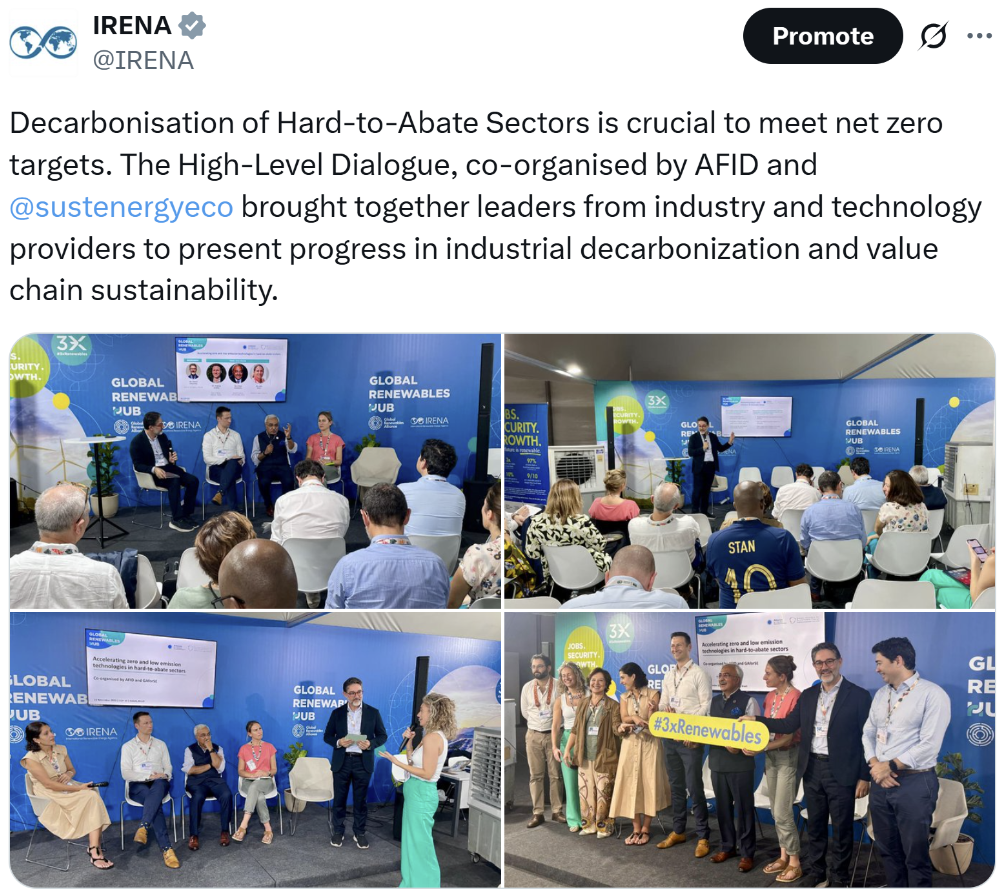
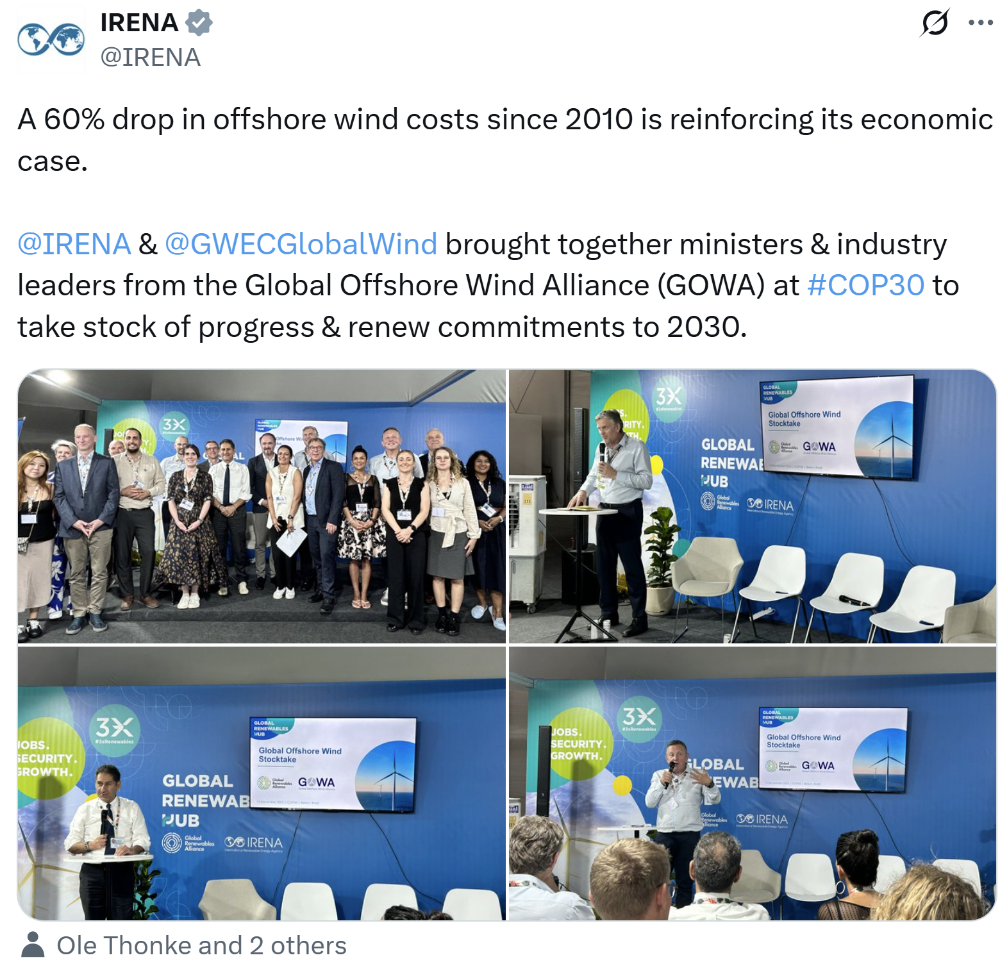
IRENA’s pavilion, the Global Renewables Hub jointly hosted with the Global Renewables Alliance (GRA), provided a lively platform for engaging exchanges with IRENA Members, partners and guests.

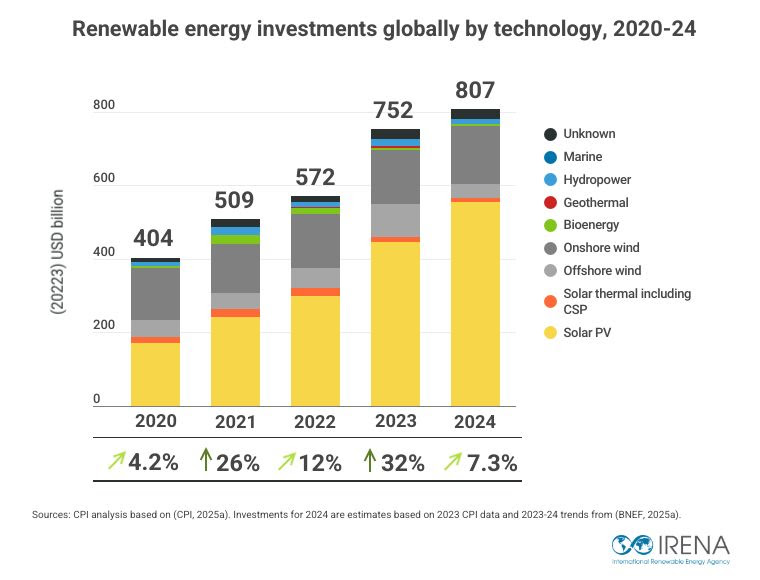
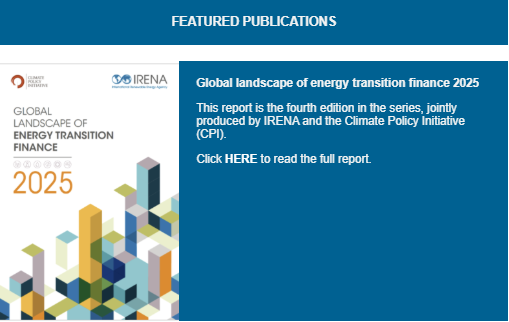
Released to inform the global finance discourse, Global Landscape of Energy Transition Finance 2025 revealed a new record of USD 2.4 trillion in energy transition investments in 2024, but these were highly concentrated in advanced economies, leaving emerging and developing countries behind.

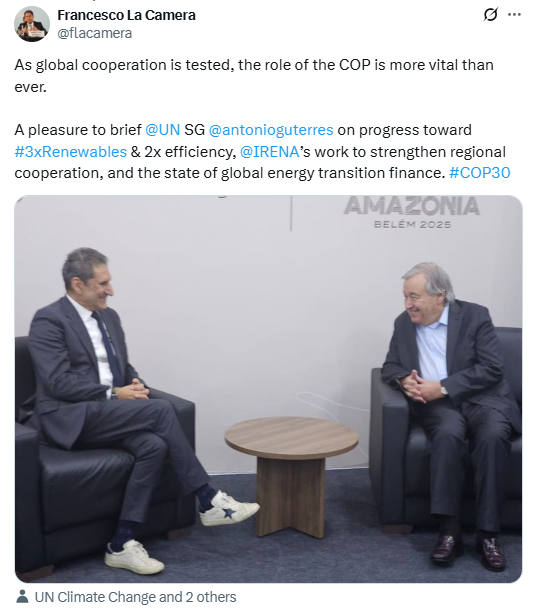
In a bilateral meeting with UN Secretary-General António Guterres, IRENA Director-General Francesco La Camera briefed him on progress towards the UAE Consensus goals to triple renewable capacity and double energy efficiency by 2030, and reaffirmed the Agency’s commitment to strengthening regional cooperation and boosting energy transition finance.

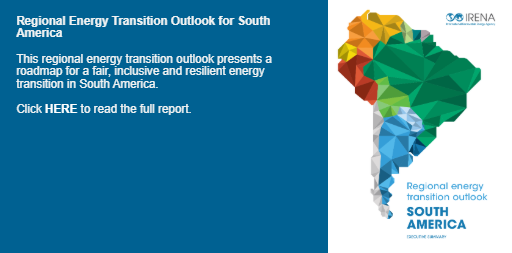
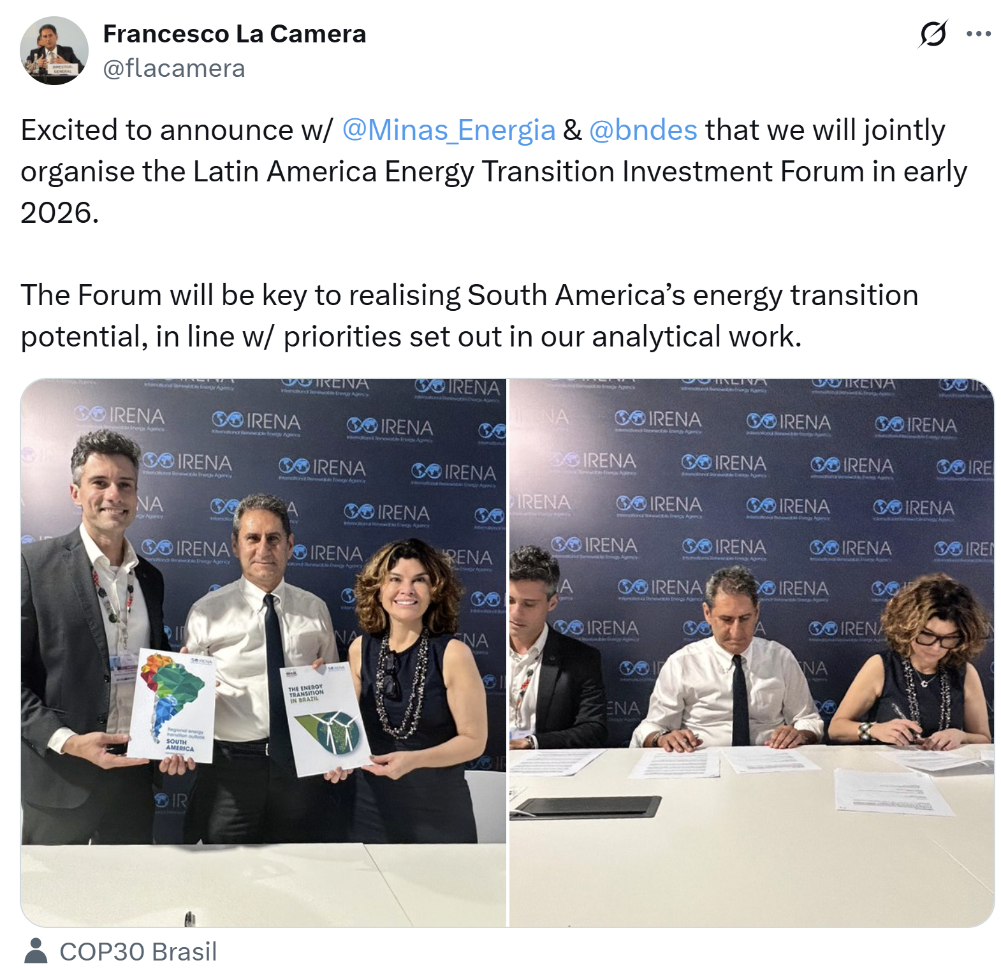
Launched at COP30, IRENA’s new Regional Energy Transition Outlook South America highlights the vast opportunities for economic growth, innovation, and energy security across the region through cooperation and the scale of investment. The region could significantly grow its GDP while creating more than 12 million jobs in the energy sector by 2050.

As a group of the world’s leading power utilities, the Utilities for Net Zero Alliance (UNEZA), facilitated by IRENA, aims to address key investment barriers, particularly in grids and flexibility. At COP30, UNEZA announced increased investment commitments of nearly USD 150 billion annually, with a major focus on grid infrastructure.

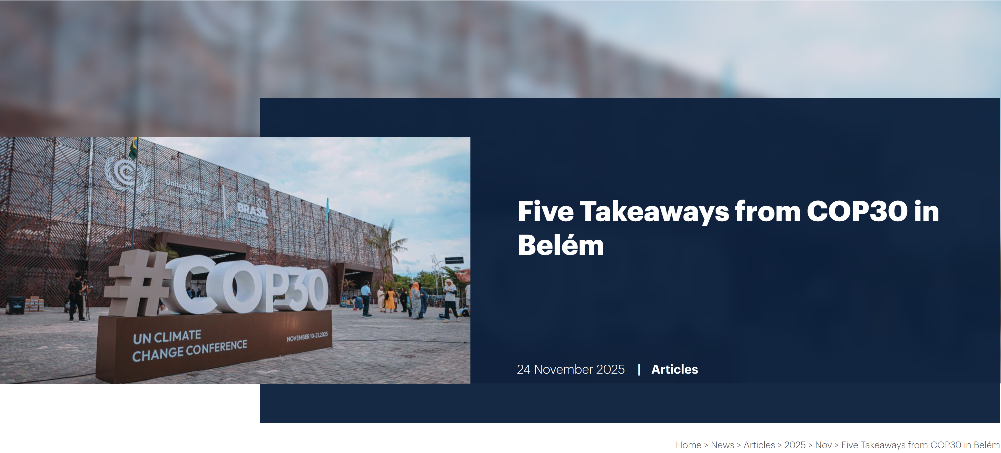
For more on the COP30 takeaway and IRENA’s insights on ways forward, please read this article. Please also see below IRENA’s latest data and activities in support of the climate objectives discussed at COP30.

Read more here: https://www.irena.org/Events/2025/Nov/IRENA-at-COP30

ADB under fire for ‘false solutions’ in energy policy review

By: Cristina Eloisa Baclig – Content Researcher Writer / @inquirerdotnetINQUIRER.net
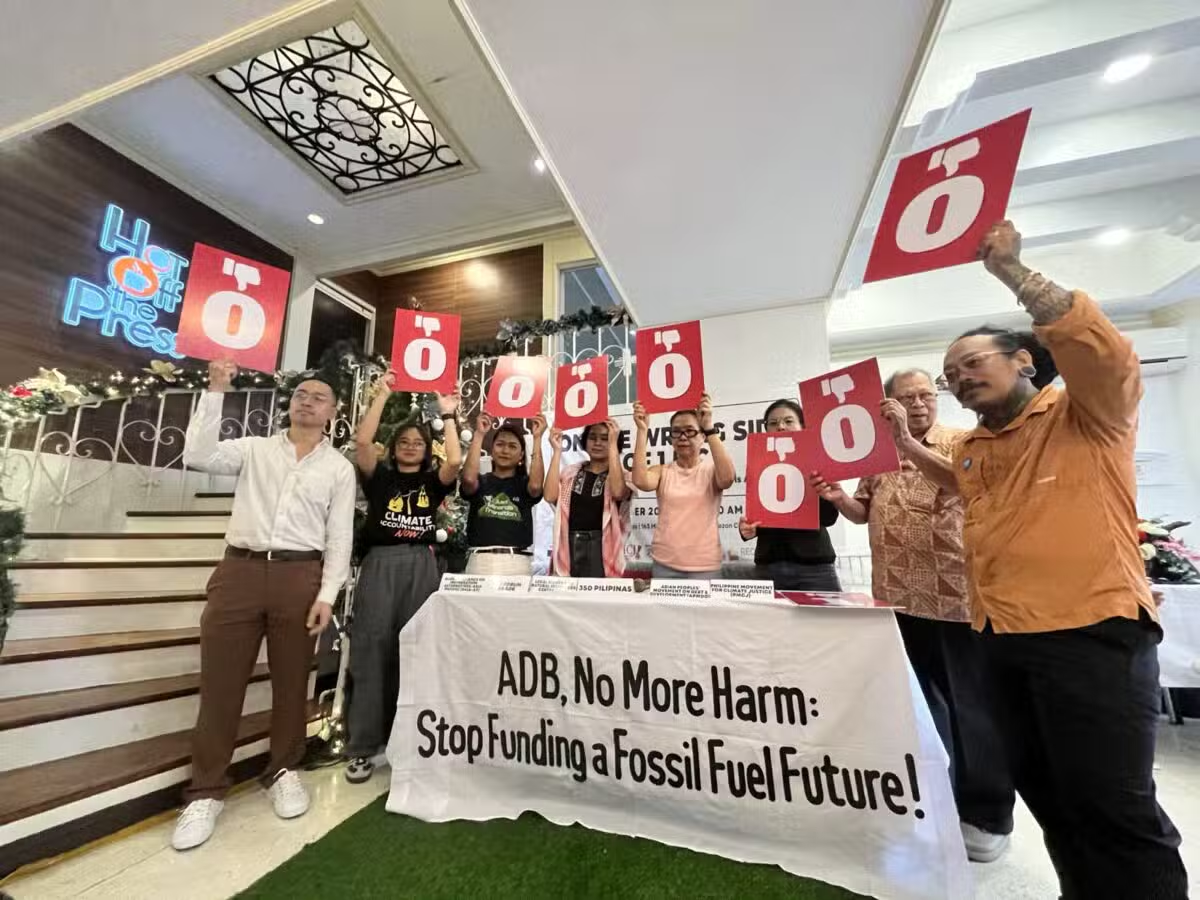
Civil society leaders give Asian Development Bank a “zero” on climate action during a press briefing in Quezon City on November 20, 2025, calling on the bank to stop funding fossil fuels and commit fully to a just energy transition.

(Photo from GAIA Asia Pacific)

MANILA, Philippines — Civil society groups on Thursday slammed the Asian Development Bank (ADB) for what they called a “dangerous pivot” toward corporate interests and false climate solutions, as the bank reviews its 2025 energy policy and faces scrutiny over decades of support for incineration and fossil fuels.

In separate statements released on November 20, the Global Alliance for Incinerator Alternatives (GAIA) Asia Pacific and the NGO Forum on ADB scored the multilateral lender for continued financing of polluting waste-to-energy (WtE) incineration and fossil gas infrastructure.

Both groups argue that the Bank’s draft policy fails to adequately protect climate-vulnerable communities, disregards human rights safeguards, and undermines global climate goals.

Billions in incineration financing since Paris Agreement
GAIA, a global alliance of over 1,000 grassroots groups and organizations in 90 countries, warned that ADB remains the region’s top backer of incineration-based waste management.

Since the Paris Agreement in 2015, GAIA noted that the Bank has financed 49 projects with incineration or co-incineration components amounting to USD 15.3 billion. Meanwhile, a separate analysis by the Climate Policy Initiative found that over 94 percent of climate finance intended for methane abatement in the waste sector continues to go to incineration.

“This reflects a troubling pattern,” GAIA said. “Money intended for climate action is being diverted to technologies that worsen pollution and drain public resources.”

GAIA’s Climate and Anti-Incineration Campaigner Brex Arevalo emphasized that incinerators—regardless of technology—continue to pollute and create hazardous byproducts.

“Incinerators remain polluters no matter the technology,” Arevalo said. “While incineration reduces waste volume, the remaining ash, wastewater, and emissions are hazardous and must still be disposed of in landfills. This exposes the myth that incineration eliminates the need for dumpsites. It does not. It creates even more toxic byproducts.”

Communities in debt, distress, and danger
GAIA and its regional partners stated that ADB-backed incineration projects are exacerbating economic and environmental risks for vulnerable countries.

In the Maldives, Zero Waste Maldives’ Afrah Ismail warned that the Bank is pushing a massive WtE incinerator in Thilafushi, despite the archipelago’s high debt burden and climate vulnerability.

“ADB has backed waste-to-energy incineration through loans and grants for a major WtE plant in the Maldives, a climate-vulnerable archipelago whose public debt now exceeds 120% of GDP and which international financial institutions classify as being at high risk of debt distress,” Ismail said.

Chythenyen Kulasekaran of the Centre for Financial Accountability cited India’s experience as further proof of failure.

“The ADB should not be funding waste-to-energy incineration, which has a massive track record of failure across South Asia. All 21 waste-to-energy plants in India are highly polluting and do not comply with the environmental policy standards, as reported by the government itself.”

‘Zero marks across the board’
In a separate assessment, the NGO Forum on ADB—a network of civil society groups monitoring the Bank and the Asian Infrastructure Investment Bank—gave the ADB a failing grade on climate, human rights, and transparency.

Citing the 2025 Energy Policy Review and draft amendments, the Forum warned that the Bank continues to support the expansion of fossil fuels and extractive industries, while ignoring demands for genuine stakeholder consultation.

“The Bank’s process violated its own Access to Information Policy and commitments to stakeholder engagement,” the group said. “Key documents were disclosed late, consultations were brief and selective, and feedback was not meaningfully integrated.”

The draft policy retains fossil gas as a so-called “transition fuel,” allowing continued investment in gas pipelines and exploration, despite what the Forum calls “overwhelming scientific consensus” that no new oil or gas fields are compatible with limiting global warming to 1.5°C.

The Forum also raised concerns over the ADB’s Energy Transition Mechanism (ETM), which critics argue may prolong fossil fuel use rather than accelerate coal retirement. Loopholes in ADB’s coal ban remain, it added, and mining is now being rebranded as “green” through the Bank’s Critical Minerals for Clean Energy Technologies (CM2CET) initiative.

ADB is also reportedly considering lifting its nuclear energy financing ban.

“This is a reckless regression,” the Forum said. “Nuclear remains expensive, unsafe, and produces long-lived radioactive waste, while Small Modular Reactors are unproven and financially burdensome.”

Other so-called “false solutions” identified in the revised policy include coal co-firing, large hydropower, waste-to-energy, and geothermal projects sited in Indigenous territories—all of which, the Forum said, come with risks of displacement, repression, land conflicts, and gendered harm.

“Energy transitions that violate rights are neither just nor sustainable,” the coalition added. “ADB’s silence speaks louder than its rhetoric.”

Civil society demands
Over a hundred civil society organizations endorsed the Forum’s Climate Scorecard, which uses lived experience as its grading system: “gas pipelines through Indigenous lands—zero; opaque financial intermediary lending that hides coal exposure—zero; promotion of nuclear, extractives, and incinerators while claiming climate leadership—zero.”

“ADB’s score of zero is a mirror reflecting the Bank’s own choices,” the coalition said.

They are now calling on the ADB Board of Directors to reject the draft energy policy in its current form and implement urgent reforms. These include:

A fully transparent review process through 2026
Closure of all coal financing loopholes
A time-bound fossil gas phaseout
Rejection of nuclear energy and CM2CET extractive-driven initiatives
An end to all false solutions
Binding human rights and just transition standards
Full alignment with the 1.5°C climate goal and a complete fossil fuel phaseout by 2030
“ADB’s Energy Policy Review remains a failed test and a failing grade,” the Forum concluded. “The climate emergency demands leadership rooted in justice and science — not profit, not technofixes, and not exclusion. Communities across Asia refuse to accept another generation locked into fossil fuels.”

Read more here: ADB under fire for ‘false solutions’ in energy policy review
UN DESA VOICE Monthly Newsletter: Vol 29, No. 11 – November 2025

Keeping the promise of placing people at the centre of development
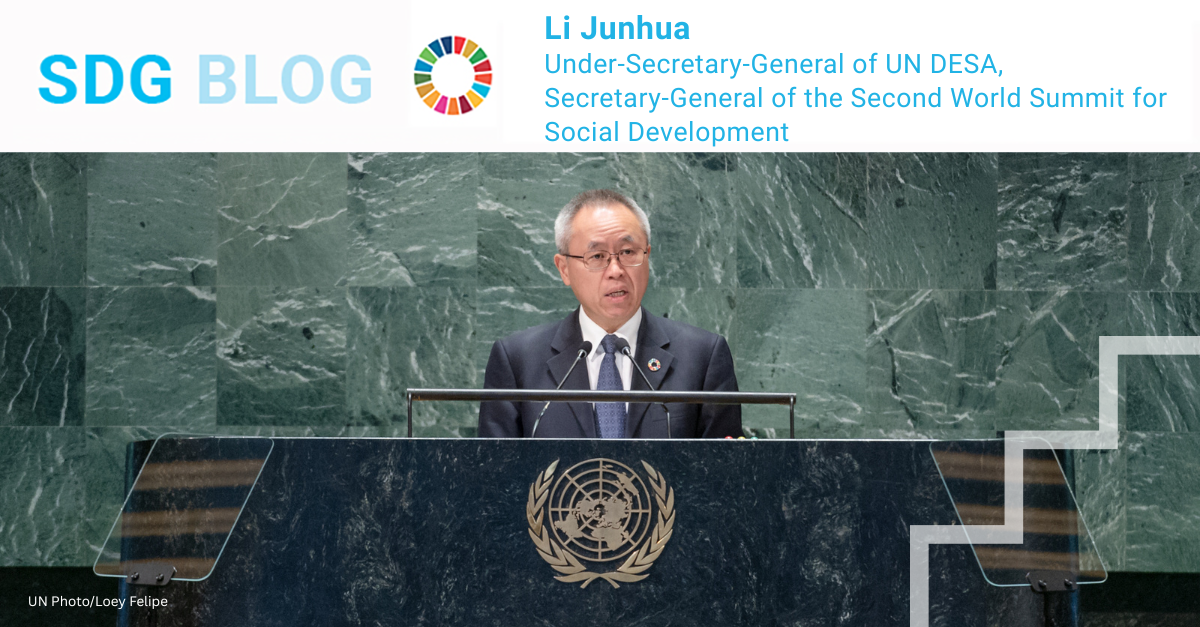
“Thirty years ago, the world gathered in Copenhagen and made a promise: to put people at the centre of development. This November, we meet again—this time in Doha—for the Second World Summit for Social Development. This Summit comes at a critical moment,” said UN DESA’s Under-Secretary-General, and Summit Secretary-General Li Junhua, pointing to widening inequalities, eroding trust and communities struggling with conflict and climate shocks.

From 4 to 6 November 2025, world leaders will gather in Qatar for the Second World Summit for Social Development. This journey began in Denmark, in 1995, where 117 countries agreed to the groundbreaking Copenhagen Declaration for Social Development and its Programme of Action.

Since then, the world has seen extraordinary economic and social progress. Over one billion people have escaped extreme poverty; access to healthcare, education and social protection has expanded; people are living longer and healthier lives; more women are able to join the workforce; and young girls can realize their hope for a future of opportunity and promise.

But challenges remain. Growing shocks from climate change impacts, conflicts, or disruptions from changing patterns of trade, production and technology are fueling uncertainty and anxiety. People are growing increasingly insecure, with many people engaged in precarious employment or not earning a living wage that meets their needs. Fueling this insecurity is a growing skepticism of the willingness of governments to put their people first.

People across generations – younger and older alike -are searching for answers to both growing and persistent social development challenges. This Summit will be an opportunity to deliver a response – one that that ensures dignity, provides opportunities, inspires hope and is rooted in action.

At the Doha Summit, Governments will adopt the Doha Political Declaration as the principal outcome. The declaration will reaffirm the centrality of eradicating poverty, promoting full employment and decent work for all, reducing inequality and enhancing social integration. The Declaration takes fully into account new and emerging issues that impact delivery of these objectives, such as digitalization and artificial intelligence, climate change and the global trend of eroding public trust in institutions, among other cross-cutting issues.

But the real success of the Summit will be measured by what happens after. By forging a new global consensus for accelerating social progress through multilateral cooperation, this Summit will ensure that people’s voices and engagement matter. Because in the end, development isn’t just about policies or politics — It’s about all of us.

“I invite you all to follow our efforts and join us in Doha, Qatar, from 4 to 6 November,” said Mr. Li. “Together, let us accelerate social development and make dignity and opportunity a reality for all.”

Learn more about the Summit: Second World Summit for Social Development
View the full programme here using our online platform TeamUp.
Follow Doha Solution and Studio sessions happening on the ground by browsing this site.
Be inspired by commitments made towards the Doha Solutions Platform for Social Development.
Follow efforts and deliberations live on UN Web TV.

https://www.youtube.com/watch?v=OXr25vn6Z0M
Share this!

Expert Voices

What social progress means to people around the world

As preparations intensify for the Second World Summit for Social Development, to be held from 4 to 6 November 2025, the Accelerating Social Progress campaign invited people from all walks of life around the world to reflect on a single question: What does social progress mean to you? 

The responses reveal a powerful message: social progress is about people, equality, and hope. Many participants described it as “a world where no one is left behind,” emphasizing the need for access to decent work, quality education, health care, and social protection.

Respondents underscored solidarity and community resilience, highlighted justice, trust, and opportunities for youth, and pointed to equality for women and persons with disabilities as key dimensions of progress.

From young changemakers to older innovators, people shared what progress means in their daily lives, innovation, compassion, intergenerational solidarity, and human rights as the moral core of development. These are the true expert voices: individuals living the realities of change and inclusion in their communities.

Together, their insights reaffirm that social progress is not measured solely by economic growth but by the well-being and dignity of every person. The collective voices gathered through the campaign will help shape the discussions in Doha, guiding efforts to renew political will for the Copenhagen Declaration and Programme of Action.

To capture even more perspectives, the online survey has now been extended until 7 November 2025.

Learn more and share your views here: https://social.desa.un.org/world-summit-2025/news/deadline-extended-what-does-social-progress-mean-to-you

Things You Need To Know

6 lessons from 80 years of UN progress toward sustainable development

Photo credit: UNHCR

As the United Nations marks its 80th anniversary, one story stands out: the world’s journey—through challenges and breakthroughs—toward sustainable development for all. Advancing Together, a new UN DESA report, traces how the UN has helped transform global cooperation, uniting countries around shared goals for people and planet. Here are six key lessons from this journey:

1. From growth to sustainable development

The  early decades of the UN focused on post-war reconstruction and economic expansion. Over time, that vision broadened to include social inclusion and environmental stewardship. The journey from growth alone to sustainable development marks one of the most transformative shifts of the UN.

2. From silos to integration

For years, economic, social, and environmental goals were treated separately. Advancing Together shows how they converged—culminating in the 2030 Agenda, where prosperity, equality, and planetary health are recognized as inseparable. True progress means advancing all three together.

3. Collaboration makes change possible

Major global conferences—from Stockholm (1972) to Rio (1992) and Paris (2015)— demonstrate the power of cooperation. Multilateral action through the UN has driven breakthroughs, from defining human rights to advancing gender equality, highlighting that shared challenges require shared solutions.

4. Resilience is key to enduring progress

Rising geopolitical tensions, persistent financing gaps, the widening digital divide, and the spread of misinformation are testing global solidarity. Yet progress continues—from renewed climate commitments to landmark outcomes of the Fourth International Conference on Financing for Development (FfD4)— proving that cooperation can endure even in turbulent times.

5. Foresight, adaptation, and innovation keep us future-ready

Anticipating change has long been a UN strength. UN DESA’s flagship reports help countries identifying risks early and be better prepared for future challenges. Investing in data, science, and digital innovation empowers institutions to adapt quickly and deliver results amid uncertainty.

6. Norms and inclusive multilateralism remain indispensable

Common frameworks—like the SDGs, the Paris Agreement, and the Pact for the Future—translate shared values into collective action. In a divided world, inclusive multilateralism is still the most effective path to tackle challenges no country can face alone, from climate change and pandemic preparedness to digital transformation and inequality.

Read more about this journey in UN DESA’s latest report “Advancing Together. Eight decades of progress towards sustainable development for all” available here.

Photo credit: UN Photo

More from UN DESA

Read more here: https://desapublications.un.org/un-desa-voice/november-2025