Rice at the Center of Feed The People PH

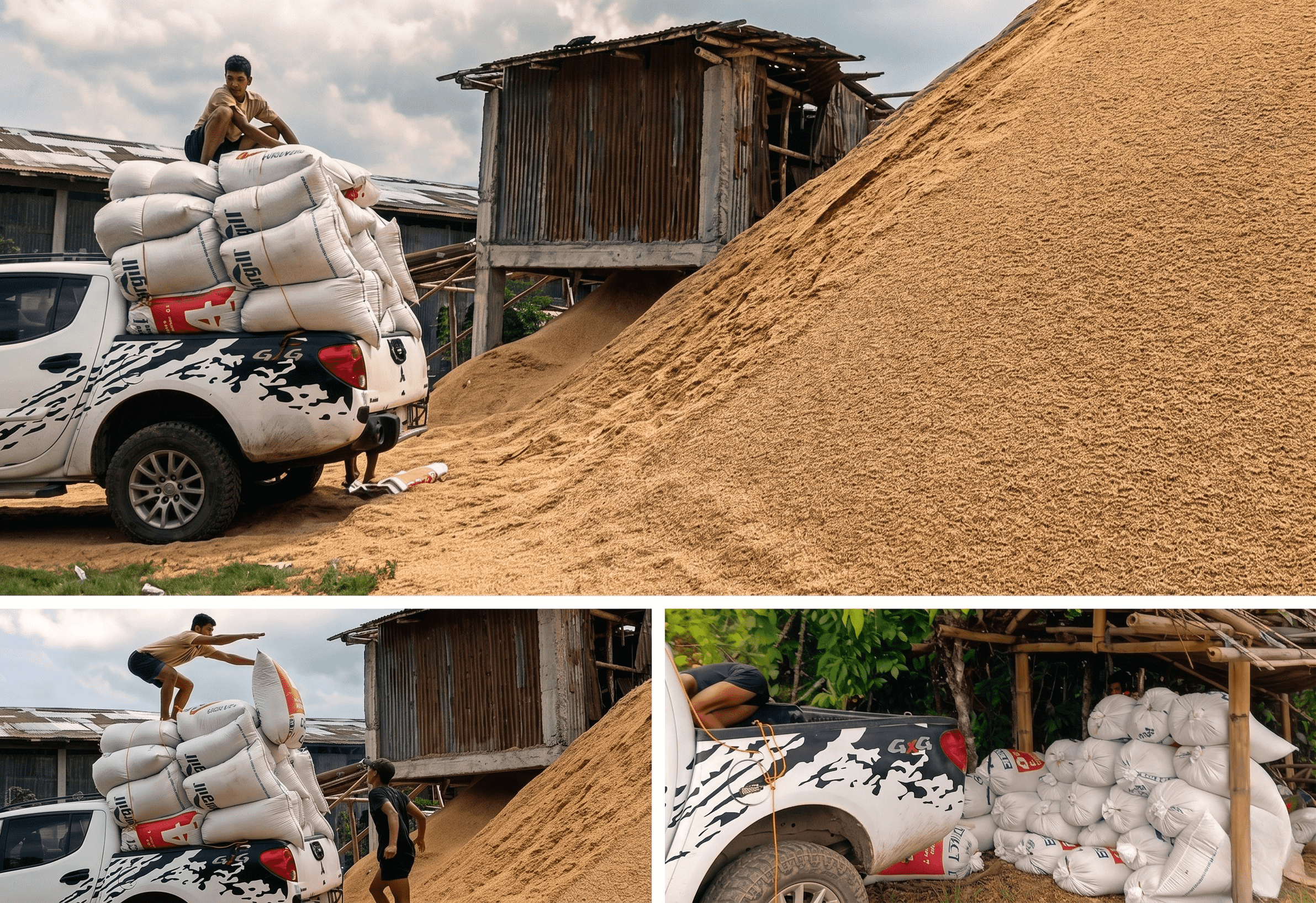
Rice is more than just food in the Philippines. It is part of daily life, family meals, and community survival. For many Filipino households, rice is the foundation of every meal and a basic need that helps families get through each day. This is why rice remains central to the mission of Feed The People PH: to help make essential food more accessible to communities.

Feed The People PH focuses on the practical work of connecting available food resources with people who need them. Through proper coordination, handling, and distribution, the initiative helps bring rice closer to families and communities. With rice as a basic Filipino staple, the purpose is clear and direct: support people by helping ensure that food reaches those who need it most.

UN DESA Monthly Newsletter for May 2026

Monthly Newsletter: Vol 30, No. 5 – May 2026

Download this issue as a PDF:

Delivering on the promise of Sevilla 

In a world tormented by war, crises and an already fragile economy, financing challenges, including in response to shocks, continue to obstruct progress towards sustainable development. Many of the poorest and most vulnerable countries are experiencing a “financing squeeze”, suffering from historically high debt service burdens, unprecedented declines in aid, and structurally low tax revenue. A more fragmented world economy is undermining trade, investment and capital flows.

Expert Voices

Forests are running out of time. How can we save them?

Forests cover nearly one-third of our earth and sustain billions of lives. Yet, they’re disappearing rapidly, putting our natural world and economy at risk. The new Global Forest Goals Report 2026, launching this month, will reveal just how much ground we’ve lost and what it will take to turn the tide before 2030. We spoke with UN DESA’s expert Shyam Paudel about the report and what we can do to reverse course.

Things You Need To Know

7 things you should know about innovating for sustainable development

This month, young innovators, scientists, world-leading experts and entrepreneurs are coming together at the annual STI Forum with one purpose – to leverage their knowledge and solutions to accelerate progress on the Sustainable Development Goals (SDGs). Here are 7 things you should know about this annual event and efforts to innovate for a sustainable future.

SDG Blog by Amina J. Mohammed, United Nations Deputy Secretary-General

More from UN DESA

Coming Up

2026 STI Forum
UN Forum on Forests
International Day of Families
WESP 2026 midyear update
Read more here: https://desapublications.un.org/un-desa-voice/may-2026

UN DESA Monthly Newsletter for April 2026

Monthly Newsletter: Vol 30, No. 4 – April 2026

Download this issue as a PDF: DESAVoiceApril2026.pdf

Youth are innovating, uniting and transforming, shaping the road to 2030

From 14 to 16 April 2026, young people will take center stage at the United Nations Headquarters in New York during the ECOSOC Youth Forum, considered the UN’s largest annual gathering of young people.

Expert Voices

Yumiko Kamiya in UN DESA’s Population Division

Population, technology and research: Advancing landmark population agenda in a changing world

The digital revolution was only just beginning, when the Programme of Action of the International Conference on Population and Development (ICPD) was adopted in 1994. Today, rapid technological advances, from digital communication and data systems to artificial intelligence and biotechnology, are fundamentally reshaping societies and development pathways. We spoke with Yumiko Kamiya in UN DESA’s Population Division about the focus of this year’s Commission on Population and Development and why it matters.

Things You Need To Know
Scene at the FFD4 Conference in Sevilla

6 things you should know about the world’s commitment to realizing financing for sustainable development

Last year, the international community came together in Sevilla, Spain, uniting behind a landmark agreement to secure financing for sustainable development. This month, Member States will gather at UN Headquarters in New York for the inaugural Financing for Development Week to follow up on the commitments made. The 2026 edition of the Financing for Sustainable Development Report will also be launched. Here are 6 things you should know.

UN DESA Monthly Newsletter for March 2026

Monthly Newsletter: Vol 30, No. 3 – March 2026

Youth in the spotlight as UN DESA examines mental health and population trends in new reports

Last month, UN DESA launched the World Youth Report on Youth Mental Health and Well-being, highlighting the urgent need for inclusive, youth-informed mental health policies. Another report, World Population Highlights 2026: Youth, is now being released, homing in on the latest youth population trends, helping policymakers use population foresight to address the needs of young people everywhere and to ensure that demographic change supports equitable and sustainable development.

Expert Voices

Financial integrity – a precondition for addressing the defining challenges of our time

Each year, illicit financial flows divert vast public resources away from classrooms, hospitals and climate action, shrinking the fiscal space countries need to serve their people. Following ECOSOC’s first-ever Special Meeting on Financial Integrity last month, Nobel Laureate in Economics Joseph Stiglitz reflected on why financial integrity matters now and who is most affected when global rules fall short.

Things You Need To Know

5 ways forests drive inclusive and resilient economies

Forests generate employment, support rural and urban livelihoods, underpin food systems, supply raw materials and energy, and provide ecosystem services that enable productivity across sectors. Yet, despite their wide-ranging economic, social and environmental contributions, forests remain systematically undervalued in economic planning, investment strategies and financial systems.

Read more here: https://desapublications.un.org/un-desa-voice/march-2026

UN DESA Monthly Newsletter for February 2026

A world on the move for sustainable, inclusive and resilient transportation

Every morning around the world, billions of people step onto a bus, bike to work, wait for a train, or drive long distances to reach their jobs, schools, markets, and health care. Meanwhile, freight systems operate around the clock to deliver food, medicines, and essential goods to communities everywhere. As it connects lives and livelihoods, access to sustainable transport is a question of life and death, poverty and prosperity, and overall well-being.

Expert Voices

Photo: UNDP. A woman and a man carrying a box of fruit.

Advancing social development: Time to turn commitments into action

When the Commission for Social Development convenes this month, it will be the first global gathering after the Second World Summit for Social Development. It offers a key opportunity to start turning the commitments made to advance social development into action. We asked the team in UN DESA’s Division for Inclusive Social Development what we can expect from the Commission’s work this year.

Things You Need To Know

UN Photo of the UN General Assembly Hall

5 ways UN DESA makes a difference for people and planet

At a time when global cooperation and sustainable development are under pressure, UN DESA continues to deliver. The department brings countries together to find common solutions, build capacity on the ground, and deliver trusted data and analysis that inform decisions shaping economies, societies and the planet. Here are five things you need to know.

ECOSOC Feature

Volume 30 | No.1 | January 2026

ECOSOC at 80: A milestone for global cooperation and sustainable development
The Economic and Social Council (ECOSOC) will commemorate its 80th anniversary by holding a special event on 23 January 2026. The event will be an opportunity to celebrate the Council’s many milestone achievements in improving people’s lives around the world. “We need to reflect on the legacy of ECOSOC and reaffirm its central role in shaping a more inclusive, resilient, and forward-looking multilateral system,” says H.E. Mr. Lok Bahadur Thapa (Nepal), President of ECOSOC.

Established by the Charter of the United Nations in 1945, the United Nations Economic and Social Council held its first meeting on 23 January 1946 in London. As one of the six principal organs of the United Nations, ECOSOC has been at the centre of global progress, advancing the principles of the United Nations Charter and promoting international cooperation on economic, social, cultural, educational, health and related issues.

ECOSOC has brought nations together to advance dignity, equality, solidarity and opportunity. It has championed human rights, promoted gender equality, and guided countries toward shared goals for a better future.

ECOSOC has also provided strategic policy guidance to the UN development system, while fostering, integration and coherence across its broad network of subsidiary and expert bodies.

By the 2000s, ECOSOC emerged as a central platform to review the progress of the Millennium Development Goals (MDGs) and, since 2015, the Sustainable Development Goals (SDGs), helping to unite the global community behind a common vision of multilateralism and solidarity.

Throughout its history, ECOSOC has served an important platform for reflection, debate and innovative thinking, bringing together diverse actors to address the world’s most pressing sustainable development challenges. The Council’s work is enriched by over 6,500 NGOs in consultative status, and it provides civil society, youth and other stakeholders a platform to contribute to intergovernmental policy making.

Today, the world continues to face poverty, rising inequalities, fast-moving crises and growing pressures on our planet. Yet, ECOSOC remains steadfast in promoting sustainable development, safeguarding people and the planet while ensuring that no one is left behind.

“The role of ECOSOC has never been more relevant and important,” says President Thapa. “ECOSOC’s convening power is indispensable—for restoring trust in multilateralism and driving coherent, collective action in our shared interests.”

Follow the commemoration of ECOSOC at 80 live on UN Web TV to:

Learn more about ECOSOC’s impact and legacy over the past eight decades.
Celebrate ECOSOC as a forum for inclusive engagement
Highlight its crucial role in accelerating progress towards the Sustainable Development Goals.
For more information: ECOSOC at 80: Commemoration Event

Note: APBest is active in Consultative Status with UN ECOSOC.